
When you mark an 11+ paper, every cross looks the same — but they're not. A wrong answer can mean five very different things, and each needs a different fix. Counting crosses tells you how many; understanding them tells you what to do.
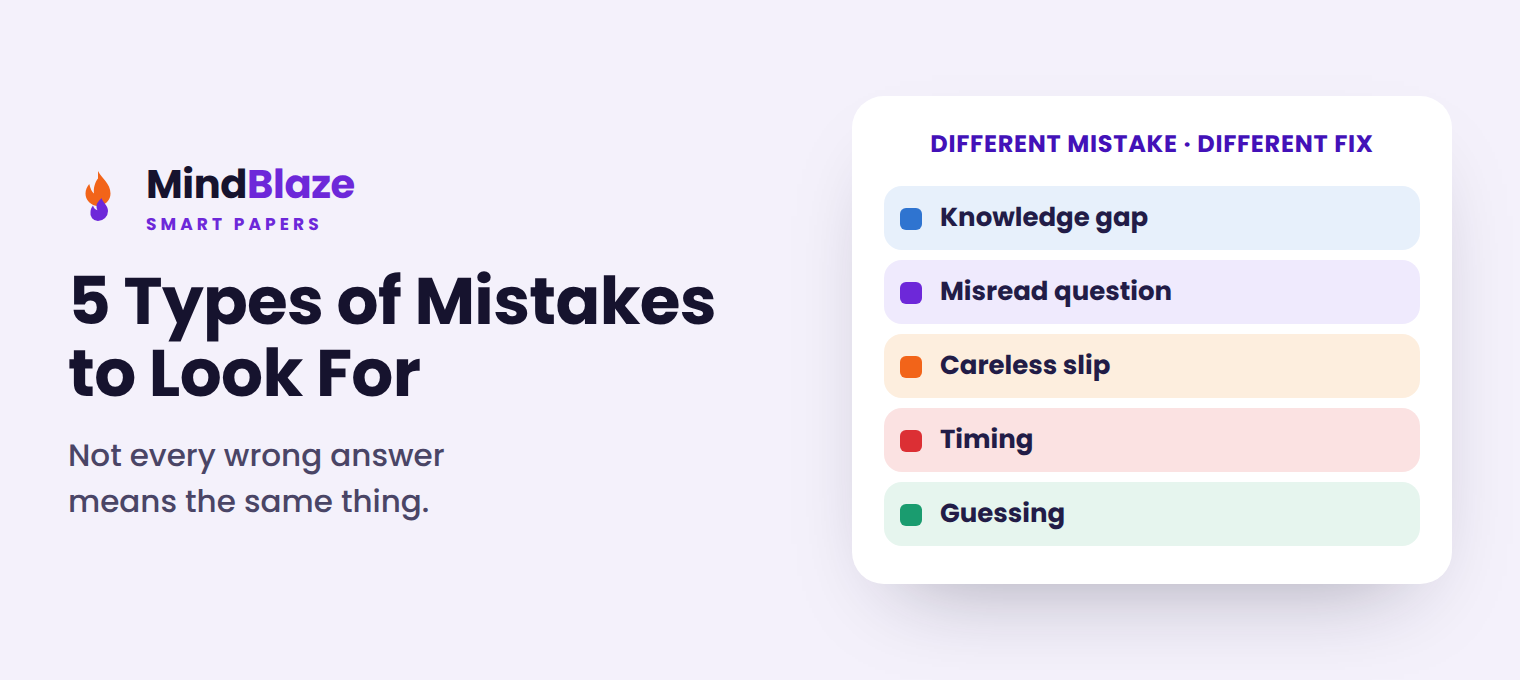
Go through the wrong answers and sort each into one of five types:
- Knowledge gap — your child doesn't understand the concept yet. Fix: a lesson on that topic.
- Misread question — they know the topic but misunderstood what was asked. Fix: underlining key words and re-reading.
- Careless slip — right method, wrong arithmetic, transcription or answer box. Fix: a simple checking routine.
- Timing — they could do it but rushed or never reached it. Fix: pacing practice, not more content.
- Guessing — no reliable method, so they picked something. Fix: build a method for that question type.
The point is simple: different mistake, different fix. Three children can get the same question wrong for three different reasons — and "do more papers" targets none of them. Keep a short mistake log across a few papers and the pattern appears fast.
What to do: sort each wrong answer into the five types, look for the recurring pattern, match the fix to the type, then re-test.
Smart Papers help turn that pile of crosses into a pattern — which skills to work on next, and the free Learning Centre lessons to start with.