
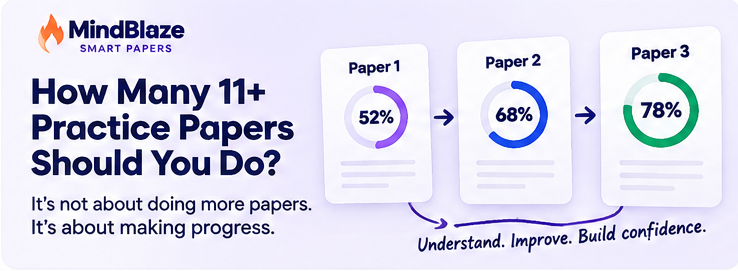
There's no magic number. Doing more papers only helps if each one is marked, understood and followed by focused practice on the weak spots — otherwise you're just repeating the same mistakes more neatly.
One carefully reviewed paper can be more useful than several papers completed without analysing the mistakes. Papers are a diagnostic tool, not the practice itself.
What matters far more than frequency is the gap between papers — the time spent understanding and fixing whatever the last one exposed. The right amount depends on your child's stage of preparation, the difficulty of the papers, and their workload and confidence.
Signs you're doing too many: your child is tired, scores are flat, and the same errors keep reappearing. A good sign another paper would help is that you've actually closed the gap the last one revealed.
What to do: mark every paper, fix the weak skill before the next one, spend the days between papers on the gap, and watch for fatigue.
Because Smart Papers show exactly which skill to work on after each paper, you get more from fewer papers — improve between papers, don't just repeat.