
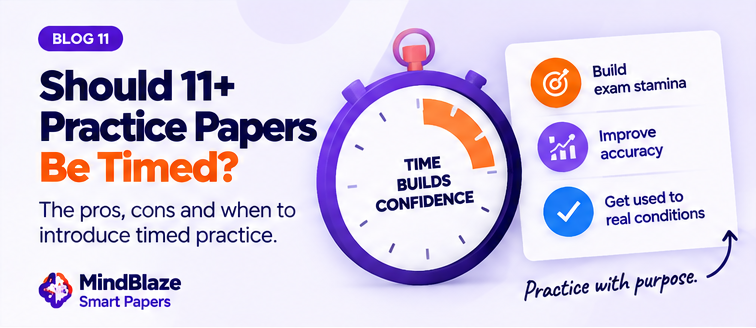
Both have a place. Untimed papers early on let your child focus on understanding; timed papers closer to the exam build the pace and stamina they'll need on the day. Timing itself is a skill — it just doesn't need to dominate from the start.
Timing too early adds pressure before the skills are secure, which can make a child rush and lose confidence. Untimed practice removes that, so they can think, check and actually learn from each question.
As the exam approaches, timing becomes important. A child may understand the questions but still lose marks if they rush or don't reach the end. Introduce realistic time limits gradually — and when you simulate exam conditions, use the timing your target test actually uses.
A timed result also helps you tell why marks were lost: knowledge, or pace? That changes what you do next.
What to do: start untimed to build understanding, add realistic timing gradually, and use a poor timed result to diagnose pace vs knowledge rather than assuming a gap.
If timed papers reveal that pace is the issue rather than knowledge, a Smart Paper breakdown makes that clear — so you fix the right thing.