 Daily missions. Brighter futures.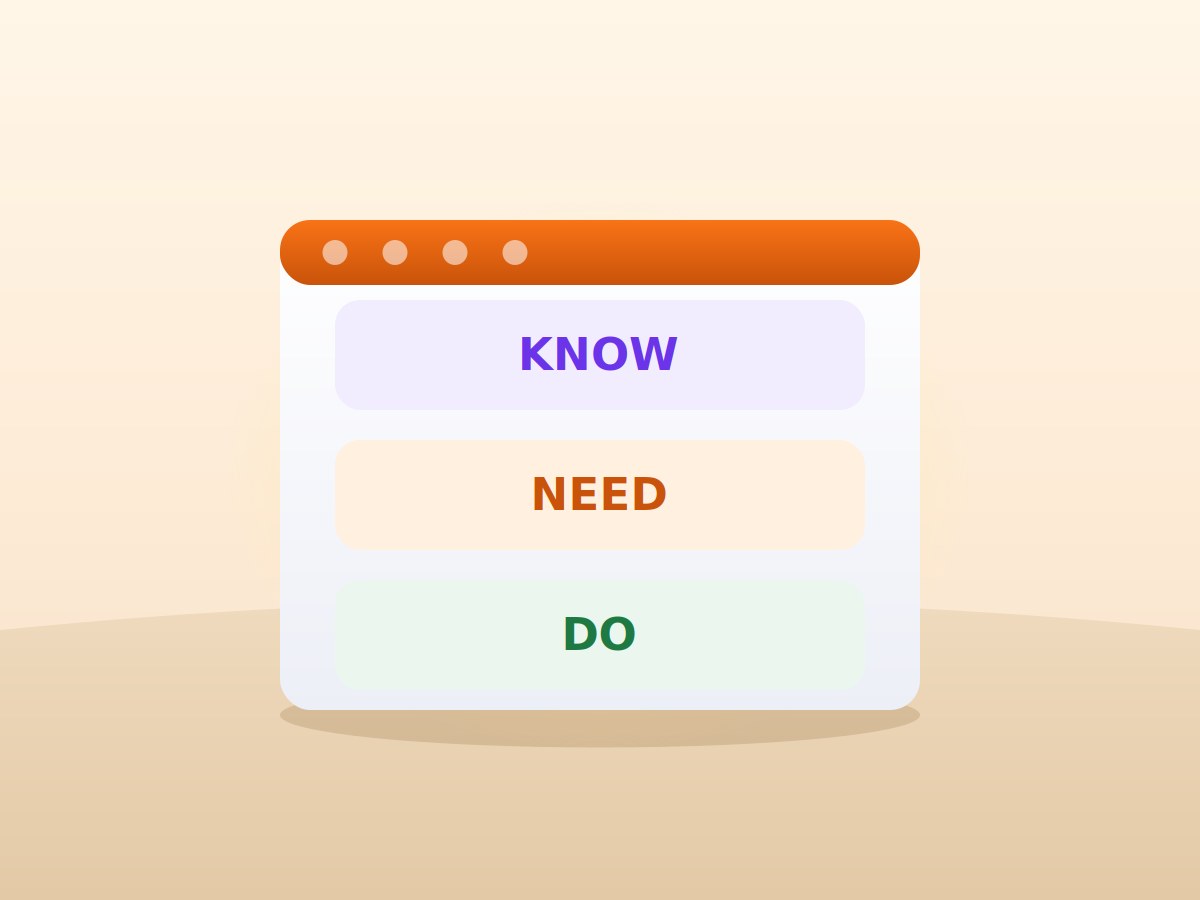
They can do the calculation. They just don't know which calculation the question wants.
Give a child 24 × 3 and they'll do it. Give them “three boxes contain 24 pencils each…” and the same child can stall completely.
The arithmetic isn't the obstacle. Deciding which arithmetic is. And the good news is that's a teachable process rather than a talent.
Three questions, in order
Don't teach keyword-hunting. Teach these, every single time, until they're automatic:
1. What do I know? What has the question actually given me?2. What do I need to find? What is it asking for?3. What could I do? Add, subtract, multiply, divide, or something in more than one step?Most children who “can't do word problems” have never been given a process. They've been told to look for words.
Walk one through out loud
“A cinema ticket costs £7. Four children are going. How much altogether?”Know: one ticket is £7, and there are four children. Need: the total. Do: 7 × 4 = £28.Said aloud it feels almost too slow. That slowness is the skill — it's what stops them grabbing two numbers and guessing an operation.
Take any word problem from their homework and ban them from calculating anything for sixty seconds.
“Just tell me what we know and what we need.”If they can do that, the sum is usually easy. If they can't, no amount of arithmetic practice would have helped.
The mistake children often make
They've been taught, somewhere, that “altogether means add”. It's a rule that works often enough to be believed and fails often enough to be dangerous — as in the cinema example above, where “altogether” means multiply.
Keyword rules are a shortcut around understanding the situation, and Year 7 questions are specifically designed to punish them.
Teach the three questions instead. They're slower and they always work.
“Tell me what the problem is asking you to find.”
Ask it before any calculating happens. It takes ten seconds and it diagnoses the actual issue.
If they can't say what's being asked, doing the sum is guesswork with good handwriting. Go back to the sentence rather than forward to the answer.
More maths in the Learning Centre
Multi-step problems and worked examples across the topics, using the same know–need–do structure your child can apply to anything.
Browse the free maths lessons →Where MindBlaze fits
Breaking a complex problem into simpler steps is one of the skills secondary maths leans on hardest, and it's rarely taught directly.
MindBlaze's daily missions mix straight calculation with problems that have to be unpicked first, so both muscles get used.

Know. Need. Do.