 Daily missions. Brighter futures.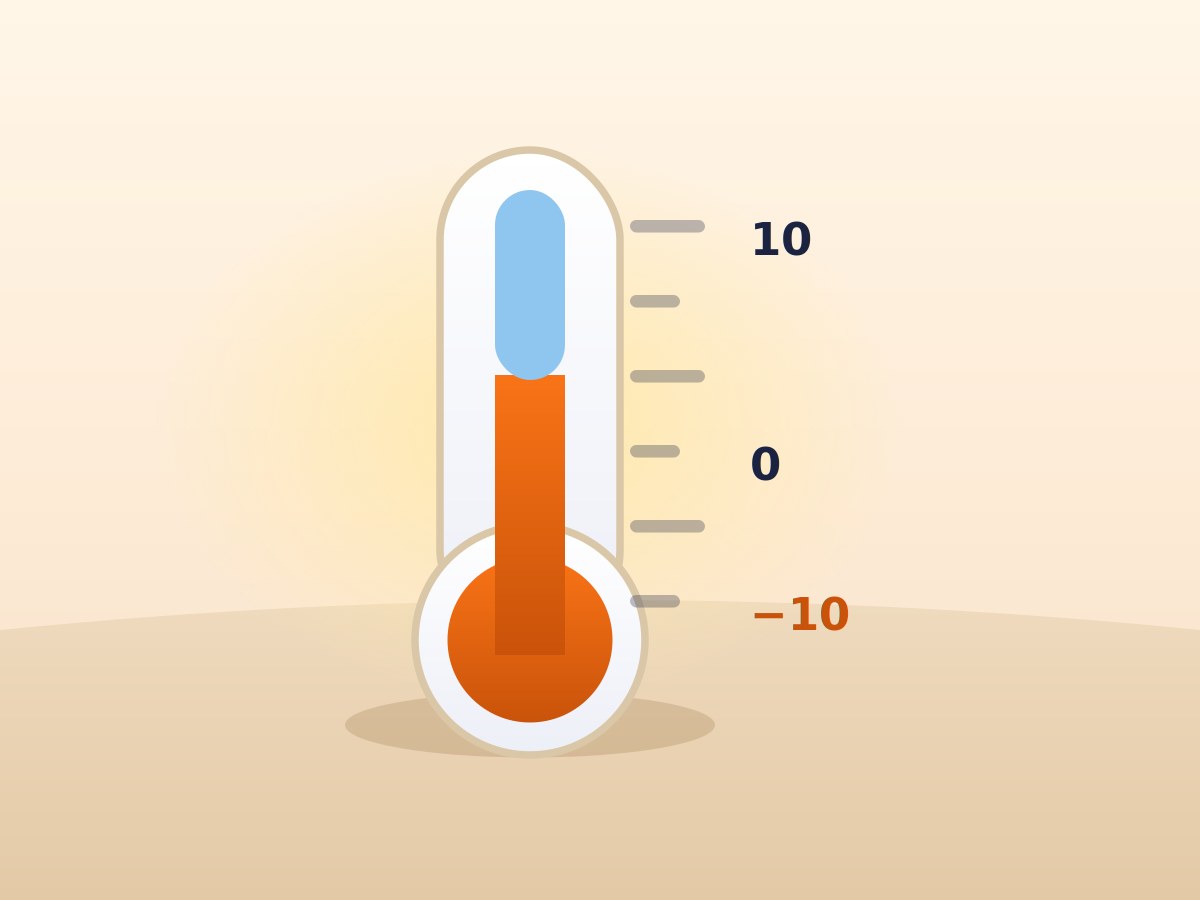
Children already understand negative numbers. They've just never connected the cold weather to the maths.
How can a number be less than nothing? That's usually the sticking point, and it's a perfectly reasonable objection.
The good news is that your child has understood negative numbers since they were about six. Nobody ever told them it was maths.
Start with the weather
It's 3°C. The temperature drops: 3, 2, 1, 0. Can it get colder than that? Obviously.
−1°C. −2°C. −3°C. We've simply carried on going in the same direction, past zero. Nothing new has happened.Almost every child accepts this instantly, because they've stood outside in it.
Then draw the number line
−5 −4 −3 −2 −1 0 1 2 3 4 5Ask which direction gets bigger. Right. Which gets smaller? Left. That's the whole tool, and it answers most negative-number questions they'll meet this year.
Say: “it's 2°C and the temperature drops five degrees. Where do we end up?”
Walk it along the line out loud together — 2, 1, 0, −1, −2, −3. Answer: −3°C.
Counting across zero with a finger on a line is worth more than any rule about signs.
The mistake children often make
Put −2 and −5 side by side and ask which one is the larger number. A great many children pick −5, because five is bigger than two — and in every context they've met until now, they'd be right.
Don't correct it with a rule about signs. Point at the number line: −2 sits further to the right, so −2 is the larger number.
The weather version lands even faster. −2°C is a cold day. −5°C is a colder one. Which day was warmer?
“Which is colder — −3°C or −8°C?”
Then: “how do you know?”
If they can explain that −8 is further below zero, they've got it. If they hesitate, hand them the number line and let them see it rather than telling them.
More maths in the Learning Centre
More practice across the maths topics your child meets in Year 6 — free, worked through step by step, and easy to dip into.
Browse the free maths lessons →Where MindBlaze fits
The thermometer is one of the simplest ways to turn an apparently strange mathematical idea into something completely ordinary — which is exactly the job.
MindBlaze keeps negative numbers in rotation in the daily missions so the idea doesn't fade between now and secondary school.

They already understood it. Now it has a name.