 Daily missions. Brighter futures.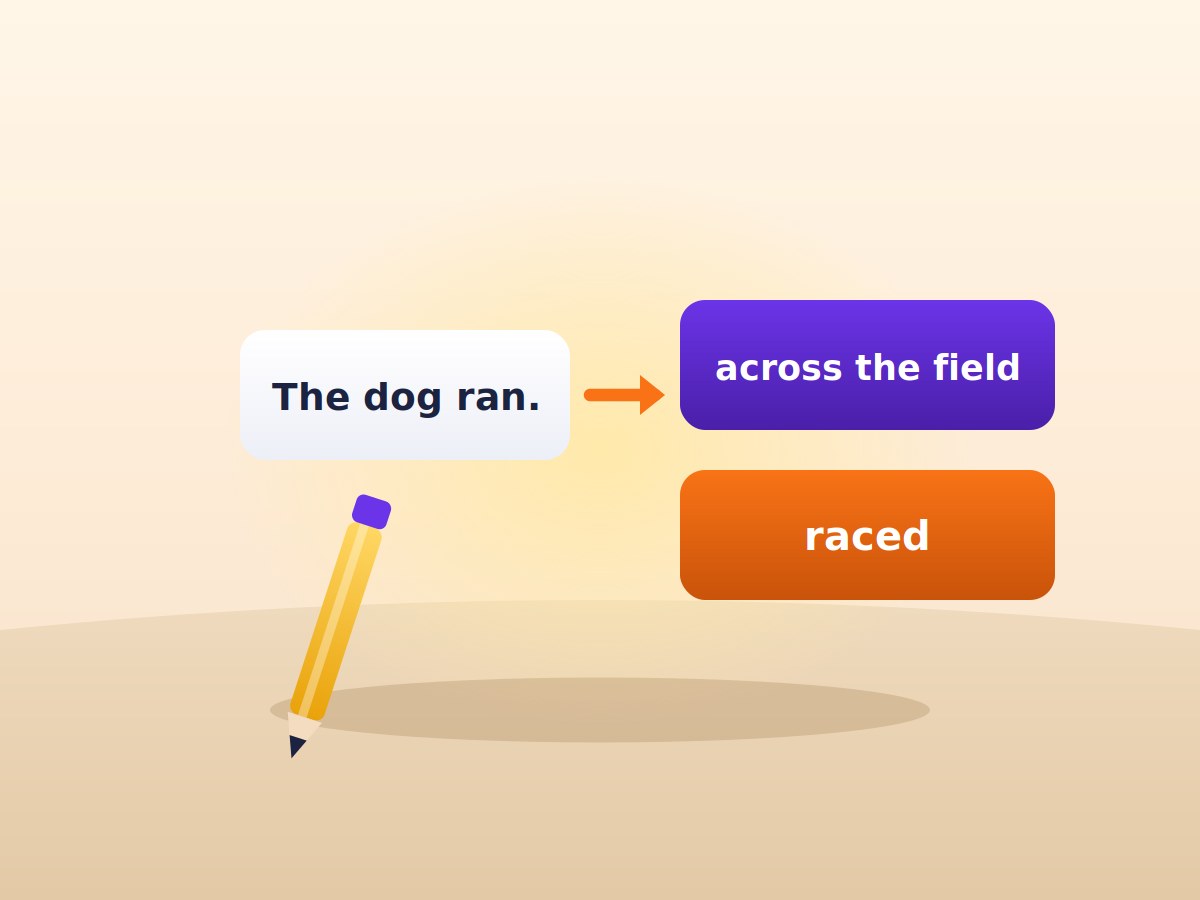
Ask one question at a time and let them choose the words. The improvement has to be theirs or it isn't an improvement.
“The dog ran.” There's nothing wrong with it. But your child wants it to be better, and you can see exactly how to make it better.
So you say: “write — the enormous black dog sprinted across the muddy field.” Lovely sentence. Unfortunately, you wrote it, and next week they'll need you again.
Ask one question at a time
Start with their sentence, exactly as they wrote it. “The dog ran.”
Ask: where? → “The dog ran across the field.”
Ask: what was the dog like? → “The large dog ran across the field.”
Ask: how did it run? → “The large dog raced across the field.”
Every word on that page is theirs. All you supplied were three questions, and next time they can ask themselves.
Then hand the questions over
The questions are the actual lesson. Where, when, what kind, how, why. Five prompts that improve almost any sentence.
Once they've been asked them enough times, they start asking themselves — which is the entire goal.
Start with The girl opened the door.
Then ask, one at a time, waiting each time: what kind of door? how did she open it? why might she be opening it?
Don't answer any of them. The silences are uncomfortable and they're where the writing happens.
The mistake parents often make
We offer so many improvements that the sentence stops belonging to the child. They can tell, and they disengage — because it's now your homework and they're transcribing.
One question. Then wait. Even when you can see four things you'd change.It's slower tonight and much faster over a term.
“Which version do you prefer, and why?”
Ask it once they've improved a sentence, with both versions still visible.
The “why” is the bit that matters. A child who can say “the second one, because 'raced' tells you it was fast without needing another word” is thinking like a writer rather than decorating like one.
It's also a useful corrective — sometimes the shorter version really is better, and noticing that is a genuine skill.
English in the Learning Centre
Building sentences, varying openings and using punctuation to control how a sentence reads — with examples rather than rules.
Browse the free English lessons →Where MindBlaze fits
The aim isn't a perfect sentence for tonight's homework. It's a child who can produce a better sentence tomorrow without you in the room.
MindBlaze's English challenges work the same way — short, frequent, and focused on the child making the choice.

One question. Then wait.