 Daily missions. Brighter futures.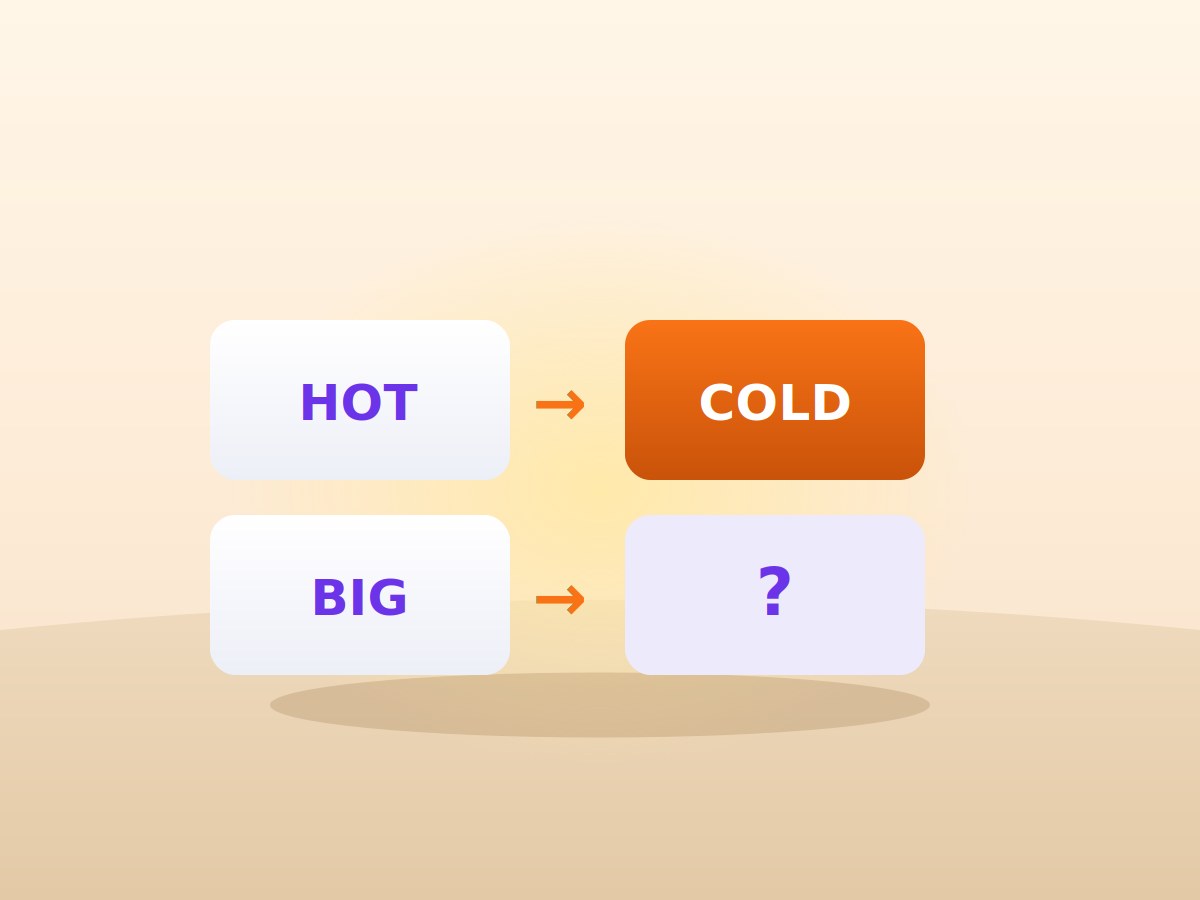
Verbal reasoning is solving problems with words. The answer is half of it — the rule they spotted is the other half.
Verbal reasoning sounds like a subject with a syllabus. It isn't quite.
It's thinking and solving problems using words and language — spotting relationships, patterns in letters, synonyms and opposites, codes, analogies, and following written information carefully. Some of it looks like puzzles because it is.
Try one and watch what happens
Hot is to cold as big is to ____Small. Your child isn't recalling a fact there — they're recognising a relationship and applying it. That's reasoning, and it's the thing being tested.
Another shape:
apple — banana — carrot — orange. Which doesn't belong?Carrot, because the others are fruit. The reason is the answer. A child who says “carrot” with no explanation may have guessed.
Don't start with speed
Timed practice has its place, and it isn't at the beginning. Early on, ask the same question every time:
“How did you work that out?”Speed comes free once the pattern-spotting is reliable. Speed drilled on top of shaky understanding just produces confident wrong answers.
Do one analogy and one odd-one-out in the car. No paper, no timer.
Then ask “what was the rule?” Getting the answer is one thing; naming the relationship is the actual skill, and it's the bit that transfers.
Build vocabulary without teaching vocabulary
Verbal reasoning leans heavily on knowing words, and word lists are a miserable way to learn them.
Reading does most of the work. Conversation does a lot. Word games do some.
And when your child hits a word they don't know, resist defining it straight away. Ask: “what do you think it might mean, from the rest of the sentence?” Now vocabulary building is reasoning practice too, and they've done both at once.
“What was the rule?”
Give them any analogy or odd-one-out, and after they answer, ask only this.
A correct answer with no rule is a guess that landed. A rule they can state will still be there next week, and it'll work on a question they've never seen.
Verbal reasoning in MindBlaze
Analogies, odd-one-out, letter sequences, codes and vocabulary — the question types explained, then practised in short bursts.
Open the Verbal Reasoning lessons →Where MindBlaze fits
The point isn't preparing for one particular test. It's the habit of looking at language, spotting a relationship and being able to say what it is.
MindBlaze includes verbal reasoning in the daily missions alongside maths and English, so it's ten minutes rather than a separate project.

The rule matters more than the answer.